|
​Newsletter of the EXTRA Working Group
of the Â鶹´«Ã½Ó³»
|
|
|
|
|
Running on EXTRA ³Ù¾±³¾±ð…
Insights from the EXTRA Working Group to help youÌý
keep track of ‘Existential Threats and Risks to All’
|
WelcomeÌý
to the EXTRA Newsletter
|
EDITORIAL
|
Extractivism and Polycrisis
Ìý
EXTRA has repeatedly highlighted the emerging polycrisis and the seemingly insurmountable challenge it poses to decision-makers at all levels. Many are left wondering where to start when faced with a tangle of interdependent risk factors that all demand consideration at once. The policy challenge of systemic action is greatly reduced, however, if we can identify and address the underlying causes of the polycrisis.Ìý
Ìý
In a recent webinar, we considered one of these underlying causes, Extractivism (watch the video below), and this newsletter further explores the theme. Extractivism refers to the reckless exploitation of various resources.Ìý
Ìý
In her feature article, Anja Nygren looks at the impact of oil industry practices. Ana Maria Paraschiv looks at the resource footprint of the AI industry’s mushrooming data centers. Finally, Hamed Hosseini presents alternatives to overcome the extractivist mindset. As always, we present a selection of the best new reports and global news stories across the X-risk spectrum, with special attention to the theme of extractivism.
Ìý
Lorenzo Rodriguez, Editor, EXTRA Newsletter
Prof Thomas Reuter, Co-editor & Chair, EXTRA Working Group
|
|
|
INTERVIEWS & WEBINARS
|
|
Original, short interviews or discussions with experts and stakeholders on various categories of existential challenges.Ìý
|
Ìý
Is Extractivism a Prime Cause of the Polycrisis? A Discussion of the Political Economy of Anthropogenic Existential Risks
Ìý
We invite you to watch the recording of our extractivism webinar, held on 17 February 2026!Ìý
Ìý
As converging existential risks threaten our world, policymakers face the daunting task of addressing multiple crises simultaneously. This session shifts the focus from symptoms to a primary driver: Extractivism. From the relentless extraction of natural resources to modern data mining in techno-capitalism, we examine how this cultural attitude has shaped our global system. The discussion features experts debating alternative approaches to resource management and identifying the guiding principles needed to avert a full-blown polycrisis.
Ìý
|
|
|
|
​ARTICLES, ESSAYS & IDEAS
|
|
​Original articles, op-ed pieces, and more – commissioned by EXTRA.
|
|
|
|
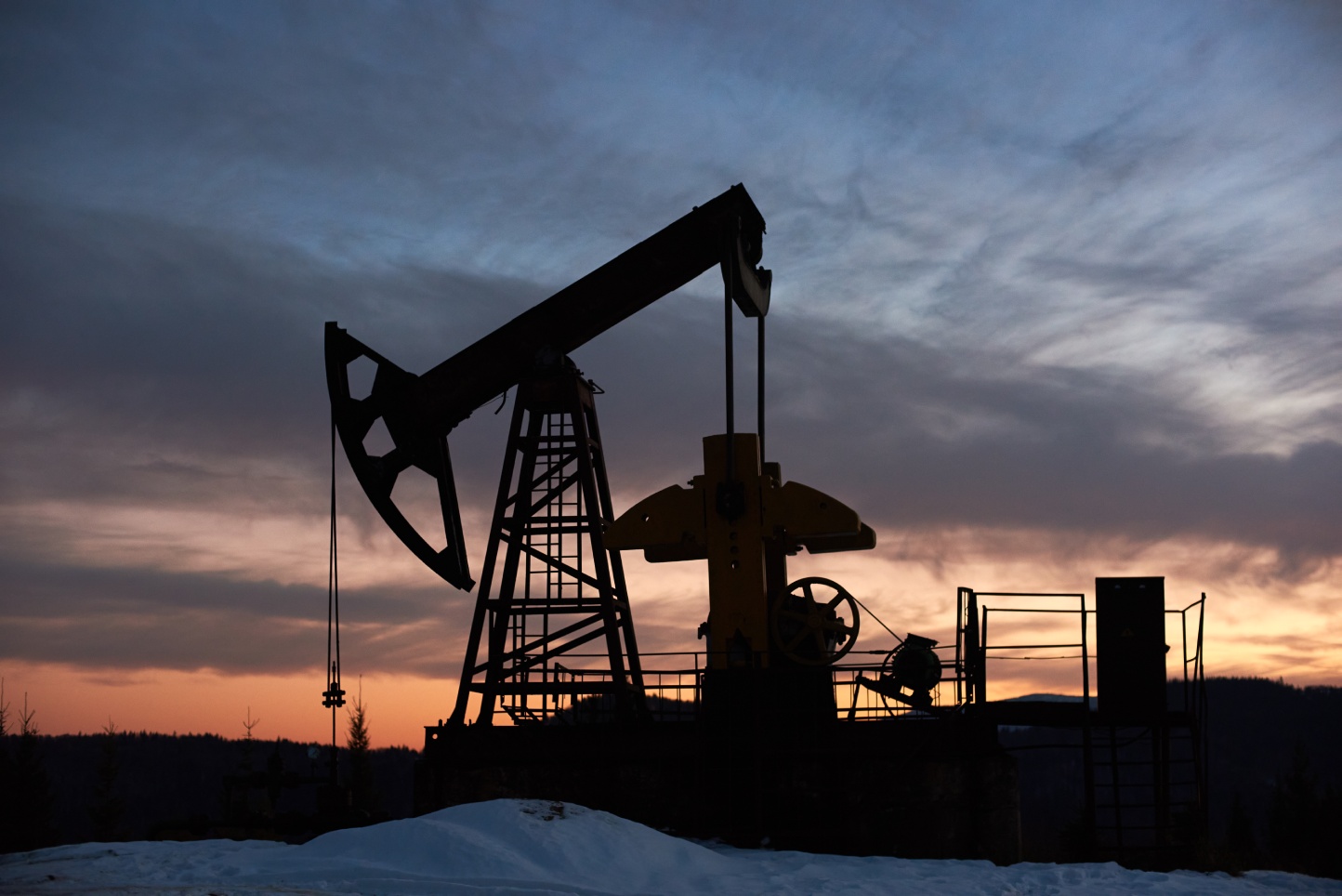
Multi-layered harms of oil extractivism
|
|
Anja Nygren, EXALT Founding Member & Prof. of Global Development, University of Helsinki
|
 |
|
|
|
Horizontal perspectives miss the full impact of oil extractivism. We must link subterranean, terrestrial, and atmospheric spaces to understand the polycrisis that results. Major producers drive climate change, soil degradation, and injustice. An integrated approach—looking upwards, downwards, and sideways—is essential to grasp the socio-spatial harms of fossil fuel production.
Read More
|
|
|
Extractivism and the Polycrisis: What Lies Beneath? A Commonist Response
|
|
S. A. Hamed Hosseini; Senior Lecturer in Social Sciences, University of Newcastle, Australia; Fellow, Â鶹´«Ã½Ó³»
|
 |
|
The "polycrisis" persists because of "compartmentality"—the structural separation of economic, social, and ecological spheres under capitalism. ThisÌýarticle advocates for "re/commonization," a dual strategy of grassroots commoning and political struggle to rebuild organic connections, move beyond extractivism, and restore a holistic, interconnected world.
Read More
|
|
|
Digital Extractivism: How AI Centers Strain Water Resources
|
|
Ana Maria Paraschiv, EXTRA Communication and Networking Specialist
|
 |
|
Extractivism today goes beyond mining to include the overuse of water for AI data centers. Intensive water consumption for cooling reduces availability for agriculture and human use, creating local vulnerabilities. This article explores the hidden social and ecological costs.
Read More
|
|
|
|
|
UPCOMING EVENTS
|
|
A selection of events to be aware of that are organized by EXTRA, allies, partners, and organizations on our radar.Ìý
|
|
|
Delivering the Water Transition (Global Water Summit 2026)
|
|
Global Water Intelligence
Physical Event | May 18-20, 2026 @ Madrid, Spain
|
|
|
|
|
Telling a Different Story: Religion, Extractivism and (Green) Colonialism in Europe
|
|
European Forum for the Study of Religion and the Environment
Physical Event | May 7-9, 2026 @ University College Stockholm, Sweden
|
|
|
|
|
|
Unearthing the Earth: Architectural Histories of Extractivism
|
|
History of Architecture and Urbanism Society (HAUS), Cornell University
Physical Event | March 26-27, 2026 @ Sibley Hall, Room 140, Ithaca, NY
|
|
|
|
|
3rd World Congress on Earth Science, Climate Change & Sustainability
|
|
Earth Science Congress 2026
Physical Event | March 25-26, 2026 @ London, UK
|
|
|
|
|
The European Climate Pact Annual Event 2026: Together in Action
|
|
European Commission – European Climate Pact
Hybrid Event | March 23-25, 2026 @ 8:30 AM – 4:30 PM CET, Brussels, Belgium
|
|
|
|
|
XIII Global Baku Forum - Solutions to Address Global Turbulence (WAAS Side Event)
|
|
Global Baku Forum/Â鶹´«Ã½Ó³»
Baku, Azerbaijan | March 15, 2026 @ 9:30 AM to 1:30 PM
|
|
Read More
|
|
|
Individualism-Collectivism and Risk Perception around the World
|
|
LRF Institute for the Public Understanding of Risk (IPUR)
Online Event | March 4, 2026 @ 5:00 PM – 6:00 PM (GMT+08)
|
|
|
|
|
|
|
|
|
|
REPORTS
|
|
Our latest selection of notable published reports on Existential Threats and Risks. Take a look at our monthly five!Ìý
If you have time, check the 20 Notable Reports or the complete EXTRA Directory on our website.
|
|
|
|
|
February 2026, 123p.
Frames the current international landscape as one of "profound uncertainty," primarily driven by a significant recalibration of US foreign policy and a growing "backlash against core principles of the post-1945 order" worldwide. Argues that the US administration's renunciation of elements of the existing international order is profoundly affecting regions such as Europe and the Indo-Pacific. These shifts are also severely disrupting global trade, with the US openly dispensing with rules it once helped create, imposing "vast, non-WTO-compliant tariffs," and deploying economic coercion.Ìý
Ìý
February 2026, 221p.Ìý
One of the best updates available on emerging threats and risks from AI development and deployment. The main focus areas are malicious use, AI malfunction, and systemic impact (e.g., the labour market).
Ìý
February 2026, 73p.
Highlights a fundamental disconnect: economic models severely underestimate climate change damages by failing to capture structural risks, extreme events, non-linear impacts, and tipping points, due to over-reliance on global mean temperature and GDP. This misrepresents real-world and systemic financial risks, particularly tail risks. It advocates for recalibrating governance toward precaution, integrating extremes and non-linearities into damage functions, expanding metrics beyond GDP to include human well-being, and fostering cross-disciplinary collaboration to address climate change as a core financial stability threat.
Ìý
February 2026, 86p.
Retailers shape what customers purchase and how they use food at home, as well as product choices, promotions, packaging, and in-store messaging. Retailers thus have a responsibility and a unique opportunity to help customers overcome a massive food waste problem and thereby maximise the benefits derived from this and other resources in short supply.
Ìý
January 2026, 107p.
Calls for a "Big Nature Turnaround," revealing a stark imbalance where US$7.3 trillion in finance directly harms nature, vastly exceeding the US$220 billion invested in nature-based solutions (NbS) in 2023—a more than 30:1 ratio. With nearly half the global economy dependent on nature and 73% of wildlife populations lost since 1970, the Nature Transition X-Curve introduces a framework to guide a systemic shift, aiming to increase NbS investment to US$571 billion by 2030. This transformation requires embedding nature-based solutions across all economic sectors and repurposing harmful capital.
Ìý
January 2026, 43p.
Based on a large global survey, it charts the top risks for this year from the insurance industry's perspective. Cyber incidents top the list, driven by AI disruption to established security practices. AI, as such, is the second-largest concern, as it affects liability exposure and causes misinformation. Business disruption is also a major concern, with a particular focus on supply chain instability. Climate Change has dropped 19% to place 6.
Ìý
December 2025, 36p.
Highlights the risks associated with changes in rules and norms, and, interestingly, the new geopolitics of scarcity, with emerging struggles over water, finance, and scarce mineral resources.
Ìý
Ìý
November 2025, 4p.
Notes that water-related violent conflict has increased by more than 50% in recent years. Examples include tensions over the Indus Water Treaty, attacks on hydropower dams in Ukraine, and violent protests in South Africa over water access. Warns that the "failure to build a water resilient world and protect water resources and infrastructure will generate new and growing security risks across economic classes, political borders, and international boundaries." The Pacific Institute has led efforts to identify, track, and analyse these conflicts through its Water Conflict Chronology.
|
|
|
|
|
|
NEWS from the World Press
|
|
Links to a must-read selection of news for a global outlook across the spectrum of Existential Threats and Risks sourced from the media and web.
Ìý
|
|
. The Conversation, 18 Feb 2026.
Discusses a new research paper in Nature that proves some AI algorithms shift users' political views long-term to align more closely with the owner’s wishes. This highlights the risk of owner-driven AI-based mass manipulation.
Ìý
. Global Footprint Network, 15 Jan 2026. A Country Overshoot Day marks the date when Earth Overshoot Day would be reached if all humanity lived like people in that country. This highlights the fundamental and severe injustices in global resource use. While the planet’s 2026 biocapacity budget would be exceeded on 27 November 2026 if everyone on Earth consumed as much as people in Honduras do, the budget would be blown by 4 February 2026 in a world modeled on Qatar. If Bangladesh were to set the global consumption standard, we would get to the end of the year with 54% of our annual global resource budget left unspent.
Ìý
.ÌýTime, 15 Jan 2026.Ìý
Advancing science with AI as a discovery engine, algorithmic shopping assistants that anticipate needs, emotionally attuned AI companions entering everyday life, heightened political scrutiny and regulation debates, and large-scale cyberattacks powered by AI, including Chinese state-backed hackers.
Ìý
. Mongabay, 22 Dec 2025.
Describes the impact of extractivist policies on the Amazon Forest, one of the world’s largest reservoirs of carbon and biodiversity. Deforestation rates are unsustainable, and the rush for critical minerals is creating political pressure to approve new, destructive mining ventures in previously protected areas.
Ìý
.ÌýThe Week (Briefing), 21 Oct 2025.
A growing U.S. “prepper� subculture expects disasters or social breakdown and invests in independent survival—bunkers, freeze‑dried food, weapons, and generators—with estimates above 20 million adherents, historically skewed toward whites, rural areas, and conservatism, but now expanding and diversifying in motives and demographics.
Ìý
. Allegra Laboratory, 15 Oct 2025.
Presents an overview of the main critiques of extractivism and unresolved questions around best practice in resource use.
|
|
|
|
|